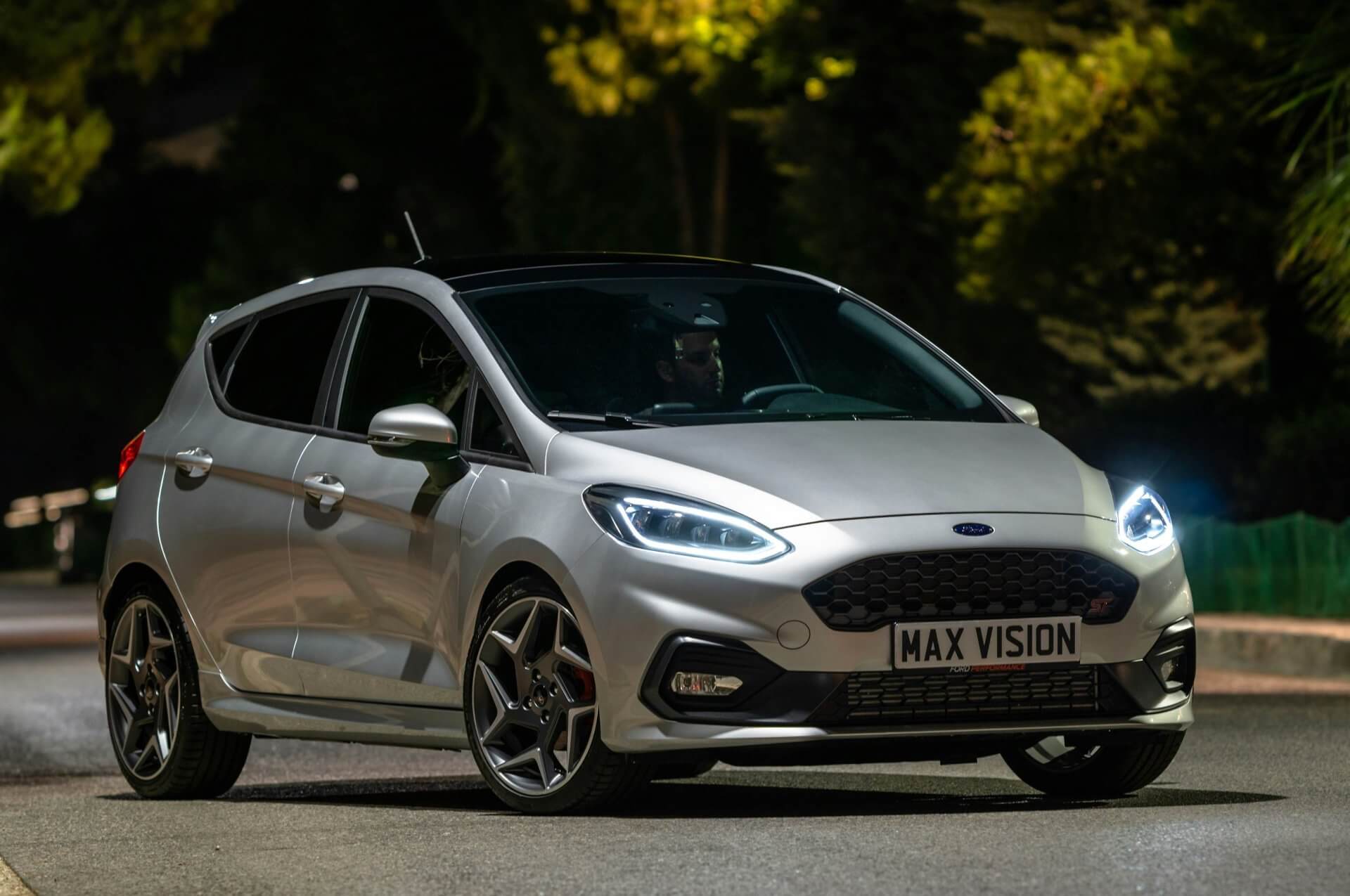
The Ford Fiesta has been on UK roads since 1976 and, for decades, it was the country’s best-selling car. Affordable, fun to drive, and cheap to run, the Fiesta has long been the go-to choice for first-time drivers, and commuters.
Through the years, the Fiesta evolved from a no-frills city car into a well-equipped supermini with something for everyone, from frugal diesel and petrol versions to the sporty Fiesta ST, widely praised as one of the best hot hatches ever built. Its sharp handling and everyday practicality have made it just as at home on twisty B-roads as it is on the school run.
The seventh generation, launched in 2017, introduced a more refined design, the latest SYNC infotainment tech, and advanced driver-assistance features. Special trims like the Vignale and Active added luxury and crossover-inspired styling to broaden its appeal.
Although Ford ended Fiesta production in 2023 after nearly 50 years, the model remains one of the most popular and widely available used cars in the UK.
Common problems with the Ford Fiesta
1.0 EcoBoost Coolant Hose Failure
A design fault in the coolant hose can lead to overheating and, in severe cases, complete engine failure, affecting mainly Fiesta 1.0 EcoBoost petrols (2012–2016).
The 1.0-litre EcoBoost petrol engine, introduced in 2012, has developed a reputation for certain reliability concerns. Early models (2012–2016) were particularly affected by coolant hose failures, where leaking coolant led to overheating and, in severe cases, engine failure.
Later versions of the EcoBoost also saw reports of turbocharger problems, carbon build-up, and in some cases oil contamination causing premature wear. While improvements were made in newer Fiestas (post-2018), owner forums still highlight EcoBoost reliability as a mixed bag compared to more conventional engines.
PowerShift Automatic Transmission Issues
Owners report jerky gear changes, hesitation, and transmission failure, often due to clutch pack wear or faulty mechatronics. It affected mainly 2011–2017 Fiestas with the 6-speed dual-clutch “PowerShift” gearbox.
It’s recommended that transmission fluid changes are done in intervals. If problems arise, a software update or clutch pack replacement may help, but in severe cases a gearbox rebuild is required. Many UK owners avoid the PowerShift models for this reason.
Clutch Wear in Manual Models
Some Fiesta owners have reported premature clutch wear or slipping, sometimes within 40,000–60,000 miles. Especially common in 1.0 EcoBoost and 1.25 petrols (2013 onwards).
Smooth driving habits and regular servicing can prolong clutch life. Replacements cost ~£500–£800 in the Ford Fiesta.
Suspension Knocks & Rear Axle Wear
Noises have been reported from the suspension over bumps due to worn drop links, bushes, or rear axle mounts, affecting Mk7 (2008–2017) and early Mk8 (2017–2019).
Regular servicing could help spot worn components early. Replacements for these issues are relatively inexpensive compared to rivals.
It’s important to note that while these issues have been reported, they do not affect all Ford Fiesta vehicles.
Ford Fiesta recalls in the UK
Coolant Hose Failure – Risk of Engine Overheating
On certain 1.0 EcoBoost models, the engine’s coolant hose could fail or detach, leading to loss of coolant and potential engine overheating. In extreme cases, this could cause engine failure.
Affected Models: Ford Fiesta 1.0 EcoBoost (produced between 2011 and 2013)
Battery Monitoring System Short Circuit
A fault in the battery monitoring system wiring could cause a short circuit, potentially leading to overheating or, in rare cases, fire.
Affected Models: Ford Fiesta (produced between September 2017 and October 2018)
Clutch Pressure Plate Fracture
In some Fiesta models with manual gearboxes, the clutch pressure plate could fracture, leading to sudden loss of drive.
Affected Models: Ford Fiesta (produced between 2010 and 2015)
Other recent notable Ford Fiesta recalls include:
| Recall Number | Model Year | Concern | Manufacturer Repair Needed | Number of Affected Vehicles |
|---|---|---|---|---|
| R/2022/171 | 2021–2022 | Certain vehicles may have an engine oil separator that was damaged prior to engine assembly. | Inspect the engine oil separator. If damage or leakage is found, replace it with a new unit. | 9,818 |
| R/2018/039 | 2017 | Affected vehicles may have a brake booster with a faulty diaphragm plate, which could lead to a loss of brake servo assistance. | Identify affected brake boosters by the date of manufacture shown on the label. Replace any defective units with new ones. | 4,757 |
Is the Ford Fiesta reliable?
The Ford Fiesta has generally been seen as a dependable small car, with millions sold across the UK since the 1970s. Its simple design, wide availability of parts, and familiarity among mechanics mean that keeping a Fiesta on the road is usually affordable and straightforward.
In reliability surveys, the Fiesta tends to place mid-table, not quite matching the reputation of cars like the Toyota Yaris or Honda Jazz, but still performing respectably. What Car?’s owner surveys show that petrol Fiestas (particularly the older 1.25 and 1.4 units) are typically the most trouble-free, while diesels and turbocharged EcoBoost engines can encounter more issues.
The 1.0-litre EcoBoost, while praised for its performance and efficiency, has been linked to issues with coolant hoses, overheating, and turbo wear in earlier models (2012–2016). These problems were partly addressed by recalls and updates, but buyers are often advised to keep a close eye on coolant and oil levels.
That said, the Fiesta’s manual gearbox models are regarded as robust, and running costs are low compared to rivals. Owners also benefit from a huge UK parts network and plenty of independent specialists, which helps keep repairs affordable even out of warranty.
What are Ford Fiesta repair and maintenance costs?
The Ford Fiesta has long been one of the cheapest cars to maintain in the UK, thanks to widely available parts, strong support from both Ford dealers and independent garages, and its simple design. Compared with rivals like the VW Polo or Vauxhall Corsa, Fiesta repair costs are often lower, making it a favourite for first-time drivers and anyone wanting budget-friendly motoring.
The cost of an annual service for a Ford Fiesta in the UK typically ranges from £160 to £280, depending on whether it’s an interim or full service, and whether it’s carried out at a main dealer or independent specialist.
Some common services and their average costs for the Ford Fiesta:
- Clutch replacement: £450 – £600
- Front brake pads and discs: £60 – £120
- Timing belt & water pump: £280 – £400 (many newer EcoBoost engines use a wet belt that needs replacement around 100k miles/10 years)
- Alternator replacement: £250 – £350
- Suspension repairs: £100 – £200
Compared to rivals like the VW Polo (which often has pricier servicing) and the Vauxhall Corsa (similar servicing costs but more frequent electrical niggles), the Fiesta remains one of the most cost-effective superminis to maintain.
Ford recommends servicing the Fiesta every 12 months or 12,500 miles, whichever comes first. Sticking to this schedule, along with regular oil and coolant checks, helps keep long-term repair costs low.
If you’re having problems with your Ford Fiesta, ClickMechanic can help sort out your vehicle with upfront pricing and connecting you with trusted local mechanics.

Louanne is a marketing and communications professional in the automotive tech industry currently at ClickMechanic, boasting over 5 years of experience.
Louanne’s work at ClickMechanic might revolve around branding and customer engagement, but her passions extend far beyond the marketing sphere. A true foodie at heart, she loves exploring diverse cuisines and talking about her culinary adventures across the world. Her writing prowess shines through in her car-related blog content, where she offers invaluable driving tips and practical car repair advice.
In her Suzuki Jimny 4-wheel drive, Louanne combines her sense of adventure with her automotive know-how, transforming every drive into a lesson and a pleasure.